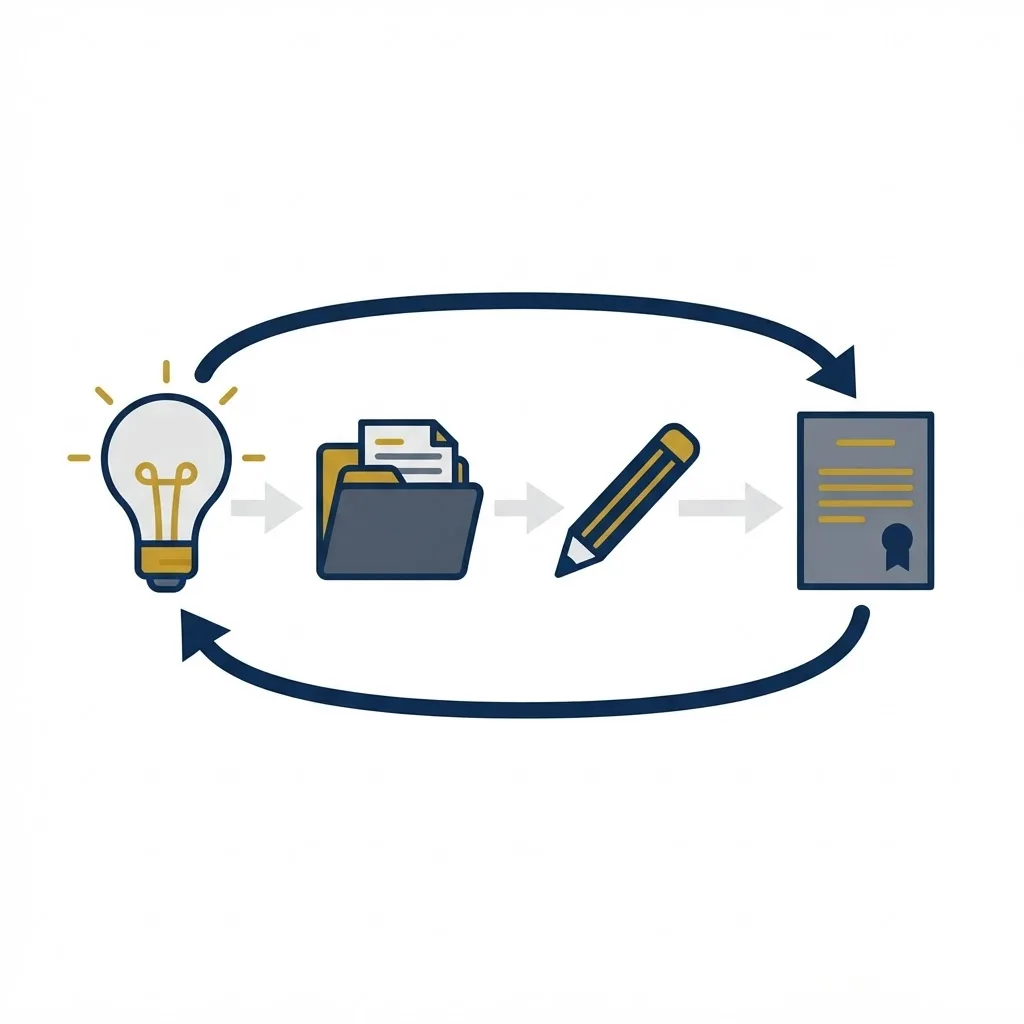
Ask ten people what do content writers do and most will say some version of "they write articles." That answer covers maybe a third of the job. The writing itself is often the shortest part of the day.
A working content writer spends far more time researching, interviewing, structuring, revising and coordinating than typing prose. The typing is the visible output of a process that mostly happens before a single sentence exists.
This guide walks through what the role actually involves, the skills it demands, the tools writers use daily, and how the career progresses from first paid article to content leadership.
What Is a Content Writer?
A content writer creates written material that helps an organisation reach, educate or convert an audience. The output spans blog articles, guides, landing pages, email campaigns, case studies, scripts, whitepapers and social copy.
Unlike a journalist, a content writer works toward a business objective. Unlike a pure copywriter, they often prioritise education and trust over immediate persuasion. The two roles overlap heavily in practice, and most working writers do both.
The defining skill is translation: turning messy internal expertise, scattered research and vague briefs into something a specific reader finds genuinely useful. That skill is why the role resists automation better than people expect.
Who Employs Content Writers?
Content writers work across almost every sector, in-house and on contract. The employer type shapes the work far more than the job title does.
- Technology and SaaS companies producing educational content that supports a sales cycle
- Marketing agencies writing for several client brands and voices simultaneously
- Ecommerce businesses covering product pages, buying guides and lifecycle emails
- Media and publishing organisations running high-volume editorial operations
- Nonprofits and public institutions communicating programmes and impact clearly
Key Responsibilities
Research and Subject Immersion
Before writing, a content writer reads existing coverage, checks primary sources, reviews competitor material and often interviews an internal expert. On technical topics, research can take longer than drafting. Writers who skip this step produce the generic content that fails to rank or convert.
Planning and Structuring
Writers build outlines that map search intent to reader journey - what the reader knows at the start, what they need to know next, and what they should do at the end. A strong outline makes drafting fast; a weak one guarantees a painful revision cycle.
Drafting and Editing
The actual writing usually happens in fewer sessions than people imagine, followed by two or three editing passes. The first pass fixes logic, the second fixes flow, the third fixes line-level clarity. Experienced writers separate these deliberately rather than trying to do all three at once.
Optimisation and Publishing
Most content writers handle on-page SEO themselves: title tags, meta descriptions, heading hierarchy, internal links and image alt text. Many also publish directly in the CMS, which is why familiarity with platforms such as WordPress or a headless setup like a Strapi CMS build is increasingly part of the job description.
How to Become a Content Writer
The entry path is unusually open, which is both the opportunity and the competition.
- Choose a subject area where you have genuine interest or background knowledge
- Write three complete pieces to professional standard and publish them somewhere public
- Learn the basics of search intent, keyword research and on-page structure
- Get comfortable in a CMS and a basic analytics dashboard
- Take two or three small paid projects to build references and real deadlines
- Collect outcome data from those projects, however modest
- Apply for retainers or in-house roles using that evidence rather than adjectives
Benefits of the Role
Content writing offers a rare combination of accessibility and long-term ceiling.
- Low barrier to entry - portfolio matters more than credentials
- Consistent demand across industries and economic conditions
- Remote-friendly by default, widening the employer pool enormously
- Constant learning, since each project means mastering a new subject
- Clear progression into strategy, editing, SEO or content leadership
Potential Challenges
The role has real friction points that catch newcomers by surprise.
- Subjective feedback from stakeholders who cannot articulate what they dislike
- Revision cycles that expand when too many reviewers are involved
- Invisible effort - clients see 1,500 words, not the six hours of research behind them
- Context switching across brands and tones, which is genuinely tiring
Best Practices and Tips
These habits make the difference between a writer who burns out and one who builds a career.
- Insist on a written brief with a named decision-maker before drafting begins
- Get outline approval separately from draft approval to contain revision scope
- Keep a personal swipe file of structures that worked, not just headlines you liked
- Track the performance of your own pieces so you can argue with data, not taste
Real-World Example
Consider a typical Tuesday for an in-house writer at a mid-sized software company. The morning starts with a thirty-minute call with a product engineer to understand a new feature. Two hours go into reading documentation, competitor pages and a support ticket log to find the language customers actually use.
After lunch she writes an outline, gets it approved in a shared doc, and drafts around 900 words before a design review where she rewrites four button labels and an error message. The day ends with edits to last week's article based on early traffic data. Total new prose written: under a thousand words. Total value delivered: a feature the sales team can finally explain, and an interface that stops confusing new users. That distribution of time is the honest answer to what content writers do.
Why It Matters
Content is often the first and longest interaction someone has with a company. Long before a demo or a sales call, a prospect reads an article, a service page or an onboarding email - and forms a view of whether the business knows what it is talking about.
Content writers own that impression. Done well, the role compounds: a single strong article can attract qualified readers for years, which is why the discipline continues to attract serious investment even when other marketing budgets tighten.
Frequently Asked Questions
Is content writing the same as copywriting?
They overlap but differ in emphasis. Content writing usually educates and builds trust over a longer cycle, while copywriting drives an immediate action. Most professionals develop both skills because clients rarely separate them cleanly.
Do content writers need SEO knowledge?
Working knowledge, yes. Understanding search intent, headings, internal linking and meta elements is now considered baseline. Deep technical SEO remains a separate specialism.
Will AI replace content writers?
It has changed the job rather than removed it. Drafting and formatting are faster, but original research, expert interviews, judgement about accuracy and accountability for what gets published still require a person. Writers who use AI as a drafting tool tend to outperform those who refuse it and those who rely on it entirely.
What career path follows content writing?
Common routes include senior writer, content strategist, managing editor, SEO lead or head of content. Some move sideways into product marketing or UX writing, where the same translation skill applies to different surfaces.
Conclusion
So what do content writers do? They research deeply, structure carefully, write clearly, optimise sensibly and take responsibility for whether a reader leaves better informed. The writing is the visible tip of a much larger process.
If your organisation needs that process handled properly rather than squeezed into someone's spare afternoon, working with a dedicated content writing team is usually the faster path to results.