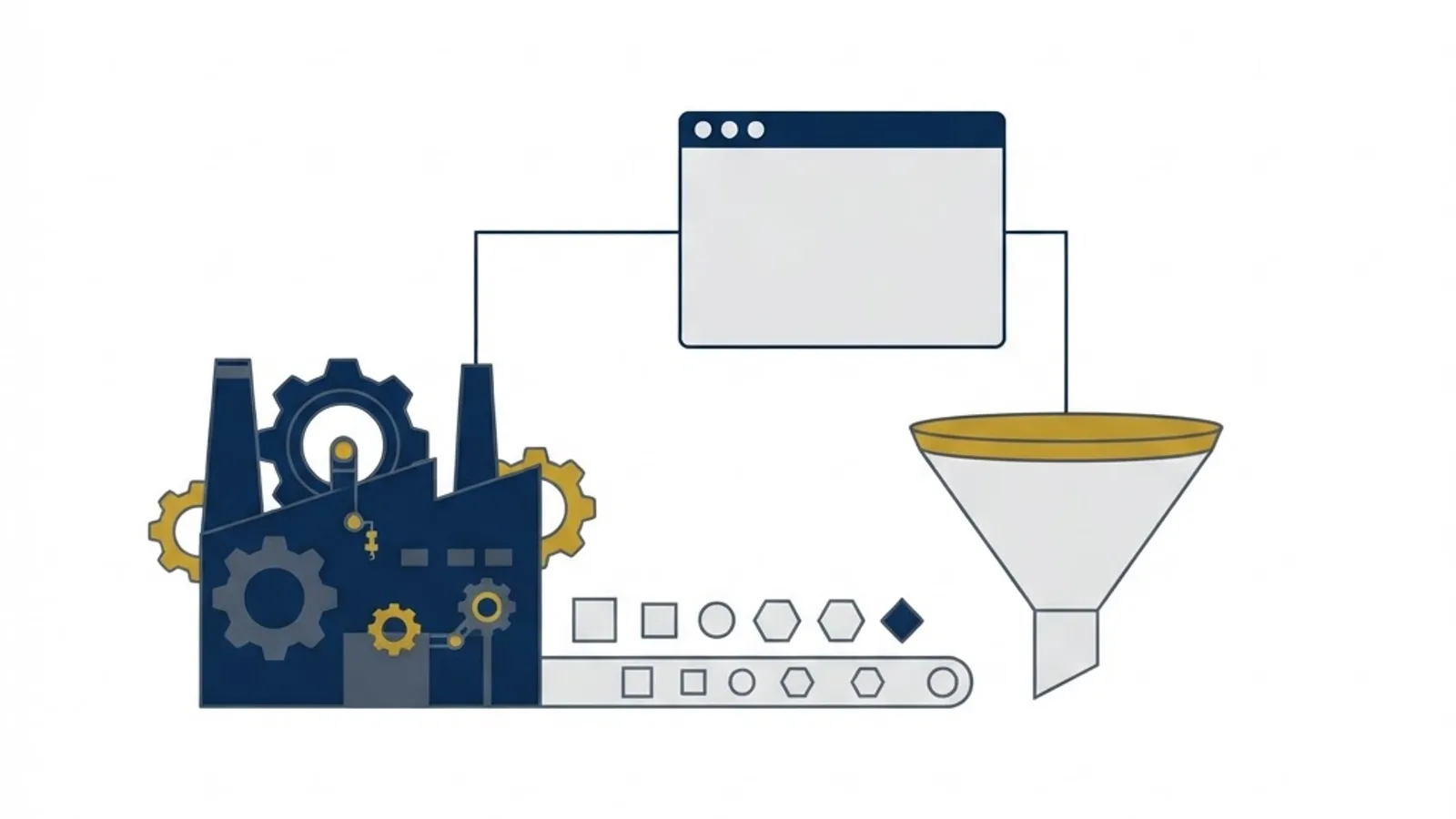
Industrial buyers changed how they purchase long before most manufacturers changed how they market. Engineers now shortlist suppliers from a desk, comparing tolerances and lead times across a dozen tabs, and only contact sales once the field has narrowed to two or three options.
Manufacturing digital marketing services exist to make sure you survive that silent elimination round. The work is unglamorous — part numbers, specification tables, downloadable CAD files, technical articles — but it determines whether your quote request form ever gets used.
This article covers which services genuinely matter for industrial firms, how they differ from consumer marketing, and how to build a programme that respects a nine-month sales cycle.
What Are Manufacturing Digital Marketing Services?
They are the specialised marketing activities that help industrial companies get found by technical buyers, prove capability credibly, and convert research activity into quote requests and RFQs.
Typical components include technical search optimisation, product data structuring, specification and application content, distributor enablement, account-based outreach, and measurement tied to pipeline rather than clicks.
The buyer is rarely one person. An engineer specifies, a procurement officer negotiates, and an operations manager signs off. Effective manufacturing marketing produces different material for each, all discoverable from the same product page.
Who Needs Them?
Any manufacturer whose customers research before contacting, which now includes even highly traditional sectors.
- Contract manufacturers competing for programme work against offshore alternatives
- Component and equipment makers selling through both direct and distributor channels
- Custom fabricators needing to demonstrate capability rather than list catalogue items
- Industrial suppliers expanding into new geographic or vertical markets
- Family-owned manufacturers whose historic referral pipeline is thinning as buyers retire
Key Services That Matter
Technical Search Optimisation
Industrial search behaviour is precise. Buyers search part numbers, material grades, tolerance ranges, and application phrases rather than broad category terms. Optimising for those long, specific queries reaches fewer people but reaches almost exclusively qualified ones.
Structured Product Data
Specification tables, filterable attributes, downloadable CAD and datasheets, and consistent part numbering make your catalogue usable. This is fundamentally an engineering task as much as a marketing one, requiring solid back-end development to manage product data properly at scale.
Application and Problem Content
Engineers search by problem before they search by product. Articles explaining how to solve a specific failure mode, select between material options, or meet a compliance requirement capture buyers earlier than any product page can.
Quote and RFQ Systems
The conversion point in manufacturing is rarely a purchase button. It is a well-designed quote request that captures drawings, quantities, materials, and timelines without demanding a twenty-field form first.
How to Get Started
Start with product data and technical findability. Everything else amplifies those foundations.
- Audit how your products are currently presented and identify missing specifications, drawings, and datasheets.
- Standardise part numbering and attribute naming across every product family.
- Rebuild product pages so each carries complete specifications, downloads, and clear application guidance.
- Interview your applications engineers to capture the top twenty questions customers ask before ordering.
- Publish detailed answers to those questions as individually optimised technical articles.
- Simplify the quote request flow and set an internal response time standard measured in hours.
- Give distributors a shared asset library with current specifications and approved imagery.
- Connect form submissions to your CRM and report on quoted value, not just lead count.
Benefits
Manufacturers who invest properly here usually report a change in the character of enquiries before a change in volume.
- Quote requests arrive with complete specifications, reducing back-and-forth by days
- Sales engineers spend less time educating and more time closing
- Geographic reach extends beyond traditional territory without additional field staff
- Technical content continues generating enquiries years after publication
- Well-organised product data supports both the website and integrated cloud systems across the business
Potential Challenges
Industrial marketing has obstacles that rarely appear in consumer contexts.
- Product data often lives in legacy ERP systems that are difficult to extract cleanly
- Long sales cycles make quarterly performance reporting misleading
- Internal resistance is common where sales teams view web enquiries as lower quality
- Confidentiality restrictions limit what work can be shown in case studies
Best Practices and Tips
The manufacturers who do this well tend to treat marketing as an extension of engineering communication.
- Publish downloadable CAD files openly — engineers who drop your part into an assembly rarely change it later
- Credit named engineers on technical content to establish genuine expertise
- Include lead times and minimum order quantities honestly; hiding them wastes everyone's time
- Invest in technically literate content writing rather than generalist copy that engineers will dismiss
- Report marketing performance in quoted dollar value so leadership sees commercial relevance
Real-World Example
A precision machining company with sixty employees generated nearly all work through three long-standing accounts and word of mouth. Its website listed capabilities in general terms — tight tolerances, quality workmanship, fast turnaround — the same language every competitor used.
The change was specific rather than clever. They documented actual machine capabilities with real tolerance figures, listed materials routinely worked with, published four detailed articles on machining challenges in particular alloys, and built a quote form that accepted drawing uploads directly.
Within a year, inbound RFQs rose from roughly two a month to more than twenty, and the average quoted value increased because the enquiries came from buyers who had already confirmed capability match. The company added a second shift. Nothing about the marketing was creative; it was simply honest and specific where competitors were vague.
Why It Matters
The generation of buyers who relied on catalogues, trade shows, and established rep relationships is retiring. Their replacements research the way they research everything else — online, independently, and before making contact.
Manufacturers without discoverable technical information are not losing deals at the negotiation stage. They are being excluded silently during research, often without ever knowing the opportunity existed. Manufacturing digital marketing services are, at their core, about not disappearing from that process.
Frequently Asked Questions
Do manufacturers really need a blog?
Not a general one, but a technical resource library is essential. Application notes, material selection guides, and troubleshooting articles serve the same function as a blog while matching how engineers actually search.
Should we publish pricing?
For catalogue components, published pricing or at least clear price bands accelerates qualification significantly. For custom work, publishing typical project ranges and minimum order values filters out mismatched enquiries without exposing quote strategy.
How long until we see results?
Product page and technical content improvements typically show search gains within three to six months. Because industrial buying cycles run six to eighteen months, full revenue impact usually appears in the second year.
Will this conflict with our distributors?
Only if lead handling is unclear. Publish distributor locators, route enquiries by territory, and share your content assets with them. Most distributors welcome a manufacturer whose marketing generates demand they can fulfil.
Conclusion
Manufacturing digital marketing services work when they respect the buyer's actual process: independent research, technical verification, and only then a conversation. Publish the specifications, answer the engineering questions, and make requesting a quote effortless.
The payoff arrives gradually and then holds. If your product data is the obstacle, begin with a site structure designed around technical catalogue search.