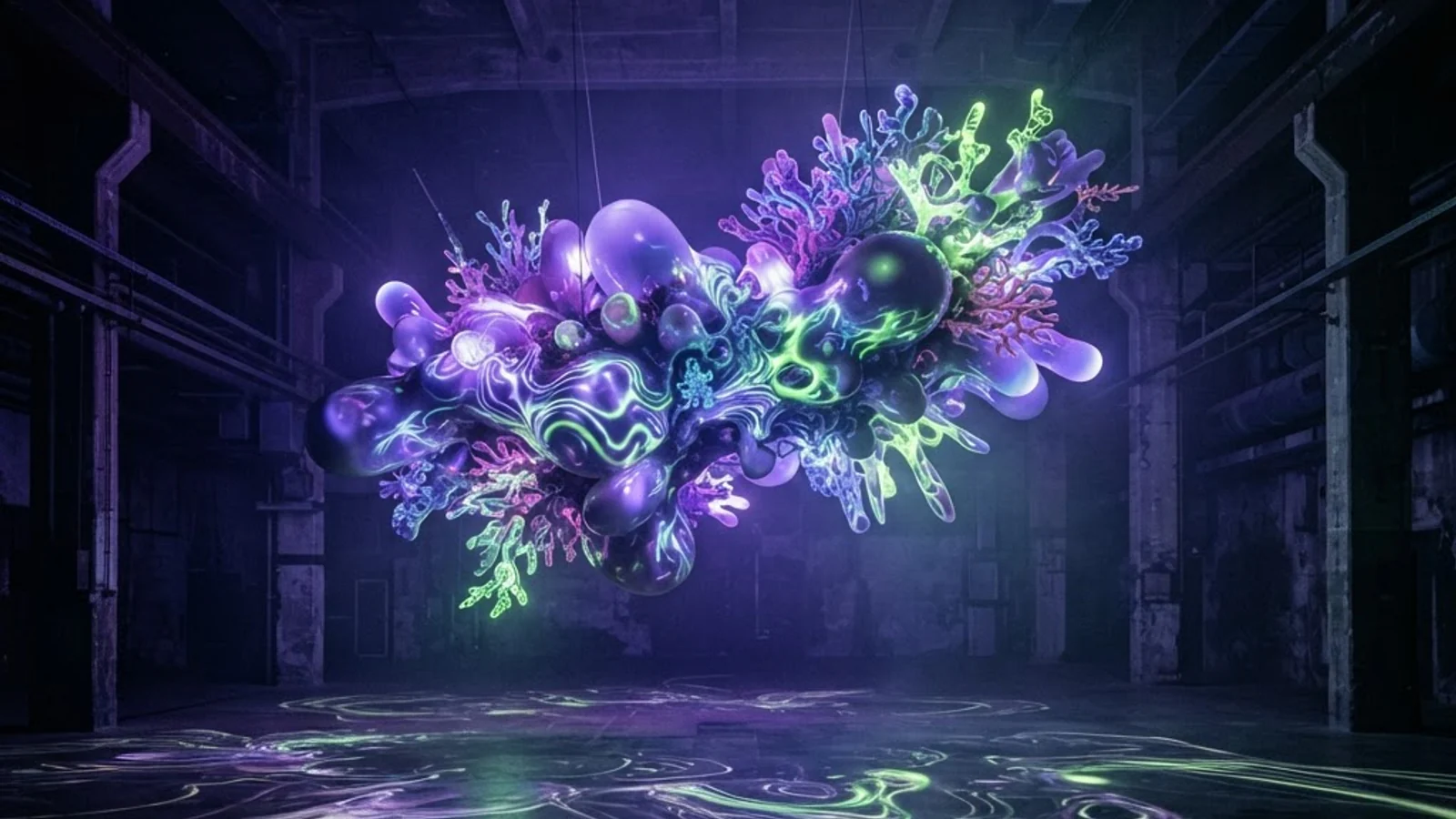
Graphic Design Meets Biomorphic Sculpture: Inside Rave Visual Culture
Walk into any warehouse rave in 2026 and the first thing that hits you, before the bass even drops, is the visual language wrapping the room. Melting typography on flyers, glowing organic sculptures pulsing above the dance floor, projection-mapped tendrils crawling across walls. This is the intersection of graphic design and biomorphic sculpture, and it has quietly become one of the most influential visual movements in electronic music culture. Biomorphic sculpture refers to three-dimensional art that mimics the curves, growth patterns, and asymmetry of living organisms rather than rigid geometric shapes, and when paired with rave-era graphic design, it produces the fluid, otherworldly aesthetic now associated with underground club culture worldwide.
Quick Answer: Graphic design and biomorphic sculpture merge in rave visual culture through organic, flowing forms used in flyers, stage sets, and installations. Designers borrow biological curves and asymmetry to create immersive, hypnotic environments that mirror the fluid, communal energy of electronic music events.
How WebPeak Supports Brands Working in Visual Subcultures
Building a visual identity around a niche subculture like rave and biomorphic design requires more than aesthetic instinct; it demands a team that understands typography, motion, and cultural nuance simultaneously. WebPeak works with event brands, music labels, and creative studios to translate underground visual movements into cohesive branding systems, from flyer and poster design to full event identity packages. Their designers study the specific visual codes of a subculture before building anything, which means the final output feels authentic to the scene rather than like a generic template stretched over an unfamiliar aesthetic. For studios producing rave visuals, stage design concepts, or biomorphic-inspired branding, that grounding in real subcultural research is often the difference between design that resonates and design that feels borrowed.
What Makes a Design Biomorphic in the First Place?
Biomorphic design draws its shapes directly from nature: cell structures, coral formations, root systems, and the human body itself. In graphic design specifically, this translates into curved letterforms, asymmetrical layouts, and gradients that mimic bioluminescence or tissue. The term itself dates back to early 20th-century art movements, particularly Surrealism, where artists like Jean Arp used soft, ambiguous shapes to suggest living forms without depicting anything literal. Rave culture adopted this visual grammar because it matches the physical experience of the event itself, bodies moving in unpredictable, fluid patterns under strobing light. A biomorphic flyer or stage prop doesn't just decorate a space; it visually echoes the collective, organism-like movement of a crowd on a dance floor. This is why so many contemporary rave posters favor melting, cell-like shapes over the sharp geometric grids common in mainstream corporate design.
Core Techniques Designers Use to Build This Aesthetic
Creating convincing biomorphic rave visuals is a craft with specific, repeatable techniques. Designers and studios working in this space typically rely on the following approaches:
- Metaball and blob modeling: In 3D software, metaballs merge into smooth, organic blobs rather than hard-edged shapes, which is why so much rave stage art looks like liquid caught mid-motion.
- Distorted typography: Fonts are stretched, warped, or run through liquify filters to mimic melting wax or stretched membrane, common on flyers for techno and psytrance events.
- UV-reactive and bioluminescent color palettes: Deep purples, acid greens, and electric blues reference deep-sea organisms and reinforce the 'alive' quality of the visuals under blacklight.
- Physical sculpture paired with projection mapping: Fabricated foam, resin, or inflatable sculptures act as screens for projected visuals, turning a static object into something that appears to breathe.
- Generative and algorithmic patterns: Many designers now use code-based tools to generate organic branching patterns similar to mycelium or coral, giving each print or animation a unique, non-repeating structure.
Each of these techniques serves the same underlying goal: making the built environment of a rave feel less constructed and more alive.
Comparing Biomorphic Rave Design to Other Event Visual Styles
Not every electronic music event leans into biomorphic aesthetics, and understanding where this style fits alongside other common approaches helps clarify why organizers choose it. The table below breaks down how biomorphic design compares to other prevalent visual styles in club and festival culture.
| Visual Style | Primary Shapes | Typical Setting | Emotional Tone |
|---|---|---|---|
| Biomorphic | Curved, organic, asymmetrical | Underground techno, psytrance, warehouse raves | Hypnotic, immersive, primal |
| Vaporwave / Retro-futurism | Geometric grids, chrome, gradients | House, disco revival events | Nostalgic, playful |
| Brutalist / Industrial | Sharp angles, monochrome, raw typography | Hard techno, industrial nights | Aggressive, stark |
| Minimalist | Simple lines, negative space | Deep house, ambient sets | Calm, understated |
Organizers typically select biomorphic visuals when the goal is total sensory immersion rather than a stylized backdrop, which explains its dominance at events built around long, continuous sets rather than short high-energy performances.
Why This Aesthetic Has Grown So Quickly Since the Early 2020s
The rise of biomorphic rave visuals tracks closely with two practical shifts in the industry. First, generative design tools and real-time rendering engines became widely accessible to independent artists, lowering the technical barrier to producing organic, flowing 3D work that once required specialized studios. Second, event production budgets increasingly prioritize immersive environments over traditional stage setups, pushing designers toward sculptural, room-filling installations rather than flat backdrops. In practice, studios that specialize in this niche report that clients are asking for physical, touchable sculptural elements far more often than they did five years ago, a shift driven by audiences who now expect events to function as full sensory experiences rather than concerts with a light show attached. This is less about a passing trend and more about a structural change in how live electronic events are conceived from the ground up, with visual designers now involved from the earliest planning stages rather than brought in at the end to decorate an existing stage plan.
Key Takeaways
- Biomorphic design borrows curves, asymmetry, and organic patterns from nature to create visuals that feel alive rather than constructed.
- Rave culture adopted this style because it visually mirrors the fluid, collective movement of a crowd on the dance floor.
- Core techniques include metaball 3D modeling, distorted typography, UV-reactive palettes, and physical sculptures paired with projection mapping.
- Biomorphic visuals differ clearly from brutalist, vaporwave, and minimalist event design in both shape language and emotional tone.
- Growth in this aesthetic is tied to more accessible generative design tools and a shift toward fully immersive event production.
Frequently Asked Questions
What exactly is biomorphic sculpture in graphic design?
Biomorphic sculpture is three-dimensional art shaped like living organisms rather than geometric forms. In graphic design, the same principle applies to 2D work through curved letterforms, blob shapes, and organic gradients that mimic biological structures instead of rigid grids.
Why do raves use biomorphic visuals instead of standard stage design?
Rave organizers use biomorphic visuals because the flowing, unpredictable shapes echo the physical movement of a crowd. This creates a more immersive, hypnotic environment that matches the continuous, communal energy typical of electronic music events.
What software do designers use for biomorphic rave art?
Designers commonly use 3D tools with metaball modeling capabilities, generative design software for algorithmic patterns, and projection mapping software to animate physical sculptures. Adobe After Effects and Illustrator are also used for flyer and typography work.
Is biomorphic design only used in rave culture?
No, biomorphic design has roots in Surrealist art and modern architecture, and it appears in product design, branding, and interior design as well. Rave culture is one of the most visible modern applications, but the style predates the scene by decades.
How can a brand apply this aesthetic outside of music events?
Brands can apply biomorphic principles through organic logo shapes, fluid packaging design, or curved digital interfaces. Working with a design team experienced in organic form language helps ensure the aesthetic feels intentional rather than decorative.
Conclusion
Biomorphic sculpture and graphic design have become inseparable from modern rave visual culture because they solve a real creative problem: how to make a physical space feel as fluid and alive as the crowd moving through it. For anyone producing event visuals, branding, or installations in this space, the priority should be studying the organic shape language closely, curves, asymmetry, and bioluminescent color logic, rather than treating it as a surface-level trend. Studios and designers who take that approach consistently produce work that feels authentic to the culture rather than imitative of it, which is ultimately what separates memorable event visuals from forgettable ones. For further reading on how design careers form around niche creative fields like this, this breakdown of whether a graphic design degree is worth it offers useful context for anyone considering a path into this specialized corner of visual design.