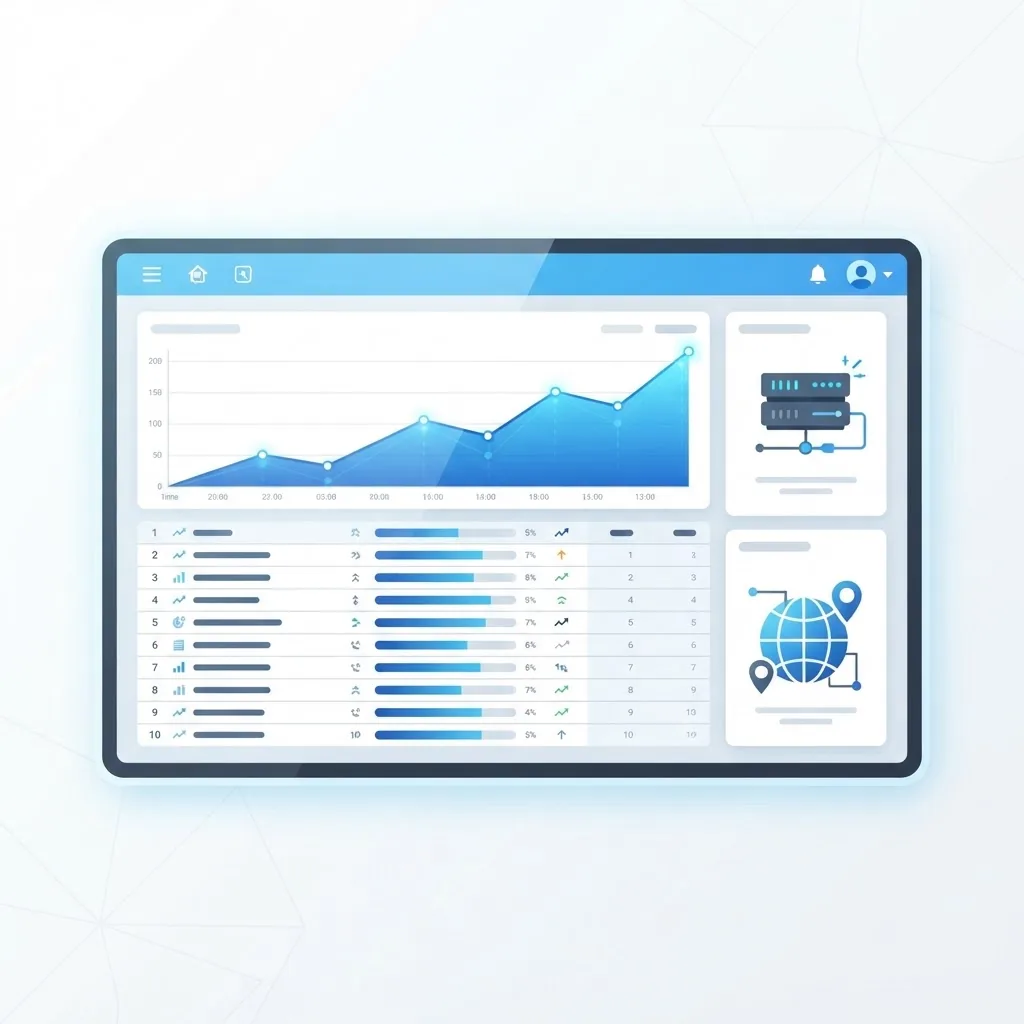
Tracking 50 keywords is a spreadsheet task. Tracking 200,000 keywords across 30 markets, 12 brands, and three device types is an infrastructure problem. That is the gap enterprise rank tracker software exists to fill.
Enterprise tools are not just bigger versions of small-business trackers. They differ in data architecture, permission models, API access, and how they aggregate thousands of positions into decisions leadership can act on.
This guide covers what actually matters when evaluating enterprise rank tracking, and which flashy features you can safely ignore.
What Is Enterprise Rank Tracker Software?
Enterprise rank trackers are platforms built to monitor search visibility at large scale — typically tens of thousands to millions of keywords, across many domains, locations, languages, and devices.
Beyond scale, they add capabilities small tools lack: granular user permissions, white-label reporting, API access for data warehousing, share-of-voice modelling, and SERP feature tracking across every result type.
The real deliverable is not positions, it is aggregated visibility trends segmented by whatever dimension the business cares about. No executive reads 200,000 rows; they need one number per market with a reliable trend line.
Who Needs Enterprise Rank Tracking?
Enterprise platforms make sense in specific organisational situations.
- Large ecommerce retailers tracking visibility across thousands of product categories
- Multi-brand groups managing several domains under one reporting structure
- International businesses monitoring dozens of country and language markets
- Agencies serving many large clients with white-label reporting requirements
- Companies feeding SEO data into central BI dashboards alongside other channels
Key Features That Actually Matter
Data Accuracy and Update Frequency
Accuracy comes down to how the tool collects SERPs and whether it can localise properly. Daily tracking matters for volatile commercial terms; weekly is sufficient for stable informational sets. Verify location precision — city-level tracking is essential for multi-location businesses.
Segmentation and Tagging
This is the most important enterprise feature and the most often overlooked in demos. You need to slice visibility by category, brand, funnel stage, priority, and market simultaneously. Without flexible tagging, large keyword sets are unusable.
API Access and Data Portability
Serious teams pipe rank data into their own warehouse to join it with revenue, inventory, and paid spend. A well-documented API with generous limits is essential, and it usually requires back-end integration work to build the pipeline properly.
SERP Feature and Competitor Tracking
Position alone no longer explains traffic. You need visibility into featured snippets, local packs, shopping results, and AI summaries, plus competitor movement in the same view, to understand why clicks changed when rank did not.
How to Evaluate and Implement
Enterprise procurement rewards structure. Follow this order.
- Define your actual keyword universe and realistic growth over two years.
- List required dimensions: locations, languages, devices, and competitor domains.
- Specify reporting outputs and who consumes each one before looking at vendors.
- Shortlist three platforms and run a paid pilot with a real keyword subset.
- Spot-check reported positions manually in incognito with correct location settings.
- Test the API properly, including rate limits and historical data export.
- Confirm permission models match your team and client structure.
- Model total cost including keyword overages, extra locations, and seats.
- Plan migration of historical data so you do not lose your trend baseline.
Step five is non-negotiable. Vendors differ measurably in accuracy, and only manual verification reveals it. Step three protects you from buying features nobody uses — reporting requirements often benefit from proper data visualisation and design input to be genuinely useful to executives.
Benefits of Enterprise Rank Tracking
At scale, good tracking changes how SEO is managed and funded.
- Early detection of visibility drops before they show up in revenue
- Clear attribution of algorithm update impact by segment
- Credible reporting that connects SEO work to commercial outcomes
- Competitive intelligence showing where rivals are gaining ground
- Prioritisation data for deciding where to invest limited resources
Potential Challenges
Enterprise tooling brings enterprise problems.
- Significant cost, often five or six figures annually at real keyword volumes
- Personalised and localised results mean no tool reports absolute truth
- Implementation and tagging require weeks of setup to be useful
- Dashboard proliferation, where reports get built but never inform decisions
Best Practices and Tips
Get more value from whatever platform you choose.
- Track fewer keywords more meaningfully — curated sets beat exhaustive ones
- Report share of voice and visibility indices, not individual positions, to leadership
- Always pair rank data with Search Console clicks and impressions
- Set automated alerts for segment-level drops instead of relying on manual review
Real-World Example
A multinational retailer tracked 180,000 keywords across 14 markets but reported a single average position to leadership. That average masked everything — two markets were collapsing while others grew, and the blended number stayed flat.
They restructured tracking around tagged segments by market, category, and funnel stage, then built a visibility index per segment fed through the API into their BI platform. Within a quarter they identified a technical issue suppressing an entire product category in two markets — worth an estimated seven figures annually. Surfacing it required a custom dashboard built as a proper internal web application rather than another vendor report.
Why It Matters
At enterprise scale, SEO decisions involve large budgets and long lead times. Making them on incomplete or misleading visibility data is expensive in a way small sites never experience.
Good enterprise rank tracker software turns noisy position data into segmented, trustworthy trends. That is what lets you detect problems early, prove impact honestly, and defend investment when budgets tighten.
Frequently Asked Questions
How accurate is rank tracking data?
Directionally reliable, never absolute. Personalisation, location, and search history mean no two users see identical results. Consistency of methodology matters more than precision of any single position.
Daily or weekly tracking?
Daily for high-value commercial keywords and during migrations or algorithm updates. Weekly is adequate for large informational sets and materially cheaper at enterprise volumes.
Is rank tracking still relevant with AI search results?
Yes, but it must evolve. Tracking presence in AI summaries and SERP features alongside classic positions is now essential, since traffic can change without any position moving.
Should we build our own rank tracker?
Rarely. SERP collection at scale is an ongoing engineering commitment with proxy and compliance overhead. Buying data and building your own reporting layer on top is almost always the better trade.
Conclusion
Choose enterprise rank tracking on data accuracy, segmentation flexibility, and API quality — then invest in the tagging and reporting layer that turns positions into decisions.
If you need help building the dashboards and data pipelines that make enterprise SEO data actionable, our cloud and data engineering team can help you design it properly.