The question comes up in almost every marketing meeting: should we invest in SEO or run ads? It is the wrong question. Treating digital marketing SEO PPC as competing options rather than complementary systems is one of the most expensive mistakes businesses make.
Search advertising buys certainty and speed. Search optimisation buys compounding, lower-cost visibility. They operate on completely different timelines and, used together, they produce information and results neither achieves alone.
This guide explains how the two channels actually interact, how to divide budget sensibly, and how to judge whether your current split is working.
What Is SEO and PPC in Digital Marketing?
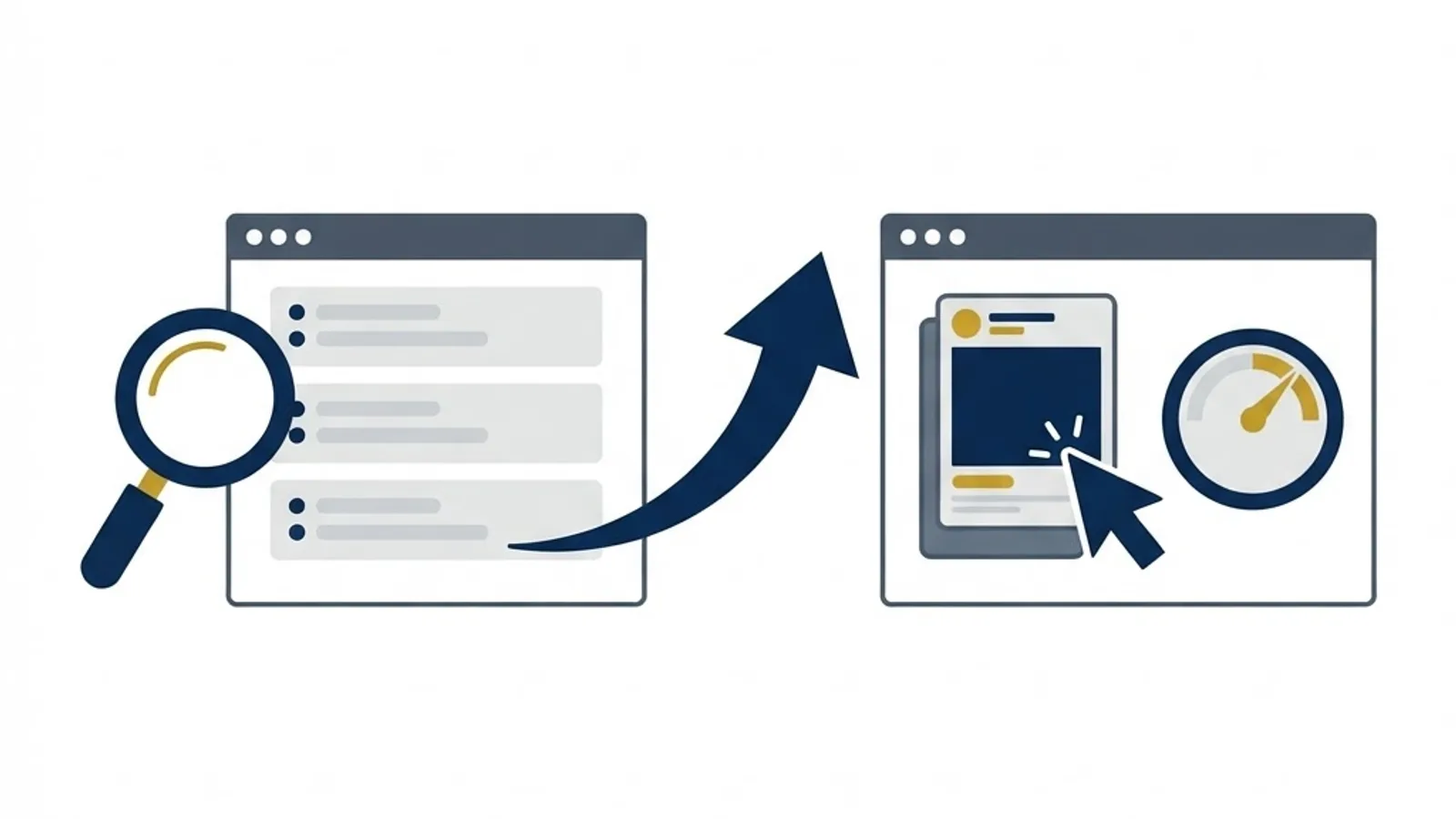
Search engine optimisation is the practice of earning visibility in unpaid search results through technical quality, relevant content and credible references from other sites. Pay-per-click advertising is the practice of buying placement in the same results, charged per click.
Most users see both on a single results page and do not consciously distinguish them as sharply as marketers assume. What they notice is relevance: does this result appear to answer my question?
The strategic difference is that PPC rents attention while SEO builds an asset. Stop paying and ads vanish instantly. Stop optimising and rankings decay slowly, often over many months.
Who Needs Both?
Almost any business with meaningful search demand benefits from a combined approach, though the balance shifts by situation.
- New businesses needing immediate visibility while organic authority develops
- Ecommerce brands with seasonal peaks that organic rankings cannot flex around
- B2B companies with long sales cycles requiring both discovery and capture
- Local service businesses competing in the map pack and paid local ads simultaneously
- Established brands defending high-value terms against aggressive competitors
Key Features of an Integrated Approach
Shared Keyword Intelligence
Paid campaigns generate conversion data within days. That data reveals which terms produce revenue rather than merely traffic, letting you prioritise organic content around proven commercial intent instead of guesswork from volume estimates.
Coverage of the Full Results Page
Appearing in both the ad block and the organic listings increases total click share beyond what either delivers alone. It also crowds out competitors and reinforces brand familiarity within a single glance.
Risk Balancing
Algorithm updates can reduce organic visibility overnight. Ad platform cost inflation can erode paid margins. Running both means neither event becomes an existential problem for your pipeline.
Unified Landing Experience
Both channels depend on the destination page converting. Speed, clarity and relevance improve quality scores and organic rankings simultaneously, which is why performance work through skilled front-end web development lifts both channels at once.
How to Get Started
Sequencing matters more than the exact budget split, particularly for businesses with limited resources.
- Audit current search visibility and identify terms where you already have partial traction.
- Launch a tightly focused paid campaign on your highest-margin offering to gather data.
- Fix technical foundations, including speed, crawlability and mobile experience.
- Use paid conversion data to select the first ten organic content targets.
- Publish genuinely useful content against those terms and build credible references.
- Reduce paid bids gradually on terms where you achieve strong organic positions.
- Reallocate the freed budget to new terms where organic traction does not yet exist.
Benefits
The combined approach produces outcomes that neither channel delivers independently.
- Immediate revenue from paid while organic investment matures in the background
- Lower blended acquisition cost over time as organic share increases
- Faster, more reliable keyword validation using real conversion data
- Greater resilience against algorithm changes and rising auction costs
- Higher total click share on competitive commercial searches
Potential Challenges
Integration sounds obvious but frequently fails for organisational rather than technical reasons.
- Separate teams or agencies running each channel without sharing data
- Attribution models that credit one channel and hide the other's contribution
- Pressure to cut SEO budget during downturns because its results are less immediate
- Cannibalisation concerns leading to premature reduction of paid coverage
Best Practices
A few operating principles keep an integrated programme honest and effective.
- Report blended cost per acquisition across both channels, not separate scorecards
- Share search query reports with the content team every month without exception
- Always bid on your own brand terms if competitors are doing so
- Test landing page changes through paid traffic before rolling them out organically
Real-World Example
A B2B software company selling scheduling tools to clinics was spending its entire budget on paid search, achieving acceptable but static results. Cost per demo had climbed steadily for three consecutive quarters as competitors entered the auction.
The team examined its own search query data and found that a cluster of long, specific questions about compliance and integrations converted at nearly triple the rate of the broad product terms it was bidding on. Those questions had almost no competition in organic results. Over nine months they published detailed answers to each one. Organic demos grew to around forty percent of pipeline, and because paid bids on those specific terms could be lowered, the blended cost per demo dropped by roughly a quarter even as total volume rose.
Why It Matters
Search results are becoming more crowded and more varied, with AI summaries, shopping modules and video results competing for the same space. Businesses relying on a single route to visibility are increasingly fragile.
The organisations handling this well treat search as one system with two levers rather than two departments with separate budgets. Coordinating that with broader digital marketing activity across email and social multiplies the effect further, since brand familiarity measurably improves click-through rates in both paid and organic listings.
Frequently Asked Questions
Should I start with SEO or PPC?
Most businesses should start with a small PPC campaign to validate which terms actually generate revenue, then invest in SEO against those proven terms. Starting with SEO alone means months of effort before you learn whether the targets were commercially sensible.
What budget split works best?
There is no universal ratio, but a common starting point is seventy percent paid and thirty percent organic in year one, shifting toward balance or organic-heavy allocation as rankings establish. Adjust based on your sales cycle and competitive intensity.
Does running ads help organic rankings?
Not directly. Paid spend is not a ranking factor. Indirectly it helps considerably, by revealing high-converting terms, increasing brand searches and funding the content investment that does influence rankings.
Should I stop ads once I rank organically?
Usually not entirely. Testing shows that maintaining paid presence alongside a strong organic listing often increases total conversions, particularly on competitive commercial terms. Reduce bids rather than pausing outright, and measure the effect.
Conclusion
Digital marketing SEO PPC success comes from treating the two as one coordinated system. Let paid buy speed and data, let organic build durable low-cost visibility, and judge everything on blended return rather than channel vanity metrics.
Share data between teams, fix your landing pages once for both channels, and rebalance budget as organic share grows. If page performance is limiting either channel, a technical upgrade through Next JS web development is the most efficient starting point.