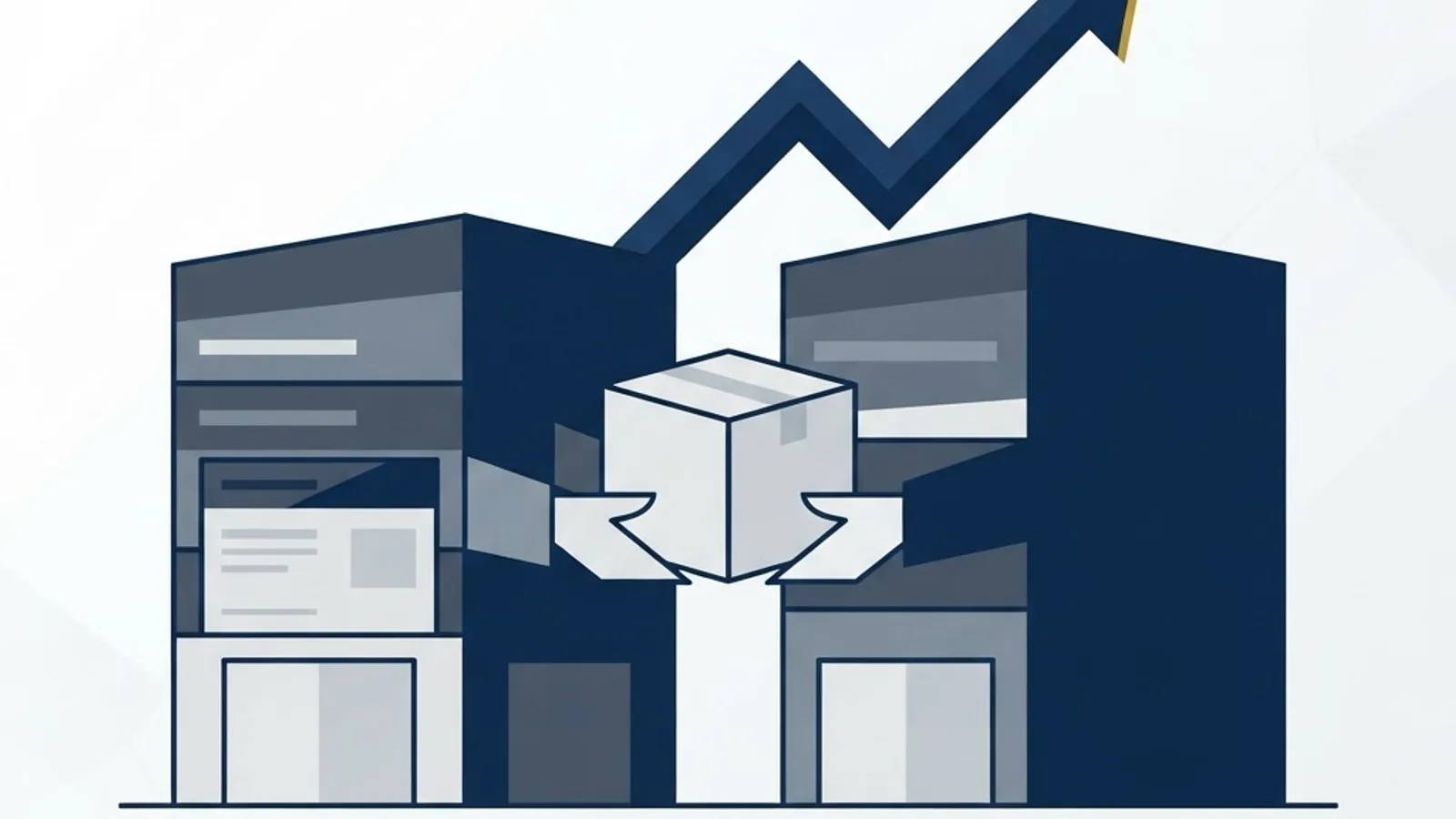
Franchise growth breaks in a very specific place: the handoff between the brand and the location. Corporate builds a beautiful campaign, a franchisee in Ohio changes the offer, another in Arizona runs their own ads, and within a year the brand means four different things in four different markets.
Digital franchise marketing exists to solve that tension. It is the discipline of running one recognisable brand across many independently operated locations, without flattening local relevance or letting owners improvise their way into chaos.
Done well, it produces something rare: national consistency with neighbourhood-level performance. Done poorly, it produces duplicate listings, internal bidding wars, and franchisees who quietly stop paying into the marketing fund.
What Is Digital Franchise Marketing?
Digital franchise marketing is a structured system for managing online visibility, advertising, and content across a franchise network. It coordinates what the franchisor controls centrally with what each location executes locally.
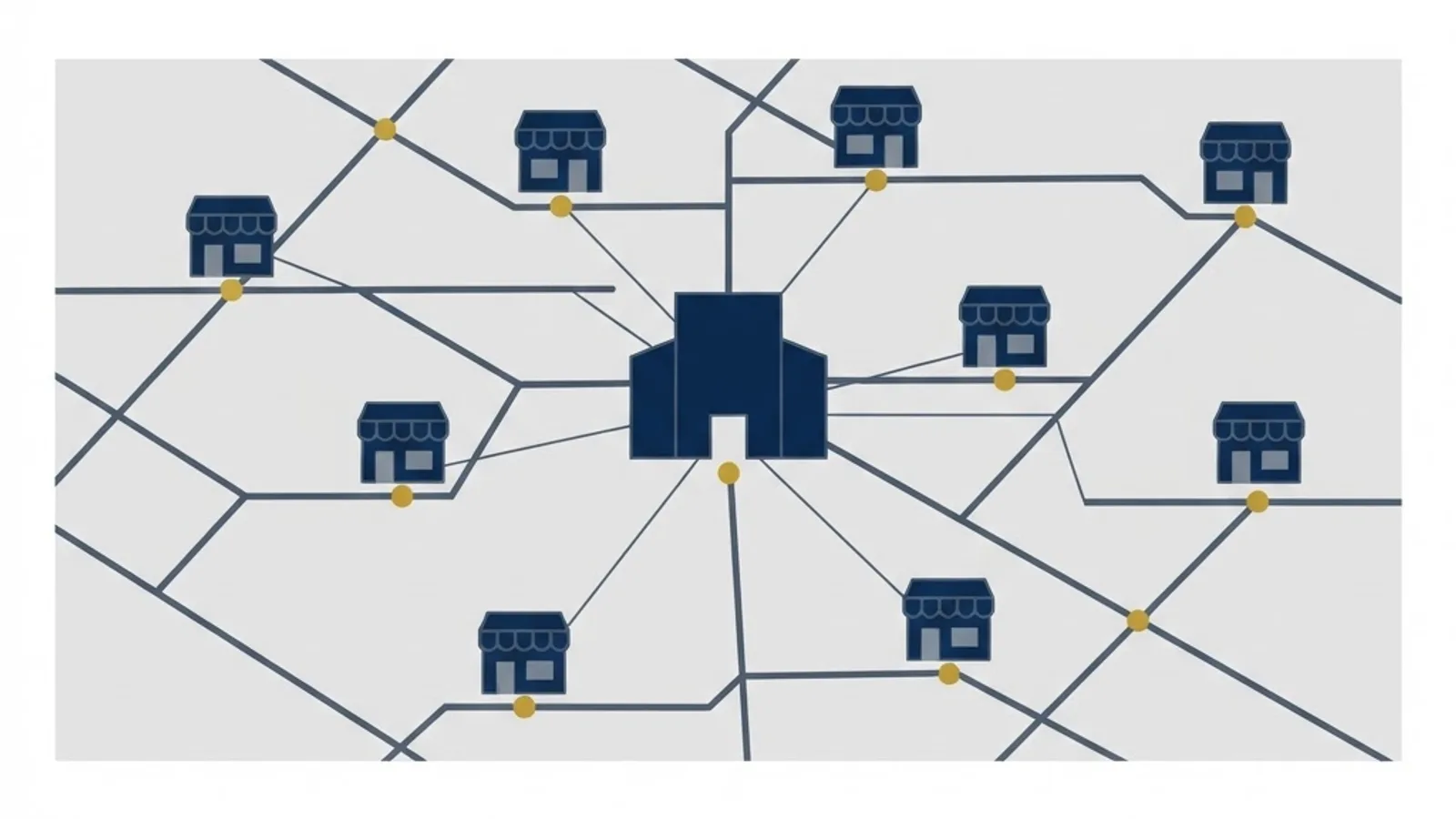
The central team typically owns brand assets, the website platform, national campaigns, and analytics. Local owners own their listings, community engagement, and occasionally a portion of paid budget. The governing principle is one brand voice expressed through many local signals.
What makes it distinct from ordinary multi-location marketing is ownership. Franchisees are business owners, not employees. They cannot simply be instructed; they have to be equipped, convinced, and shown results.
Who Uses Franchise Marketing Systems?
Any network with independent operators under a shared brand benefits, but some models depend on it entirely.
- Food and beverage franchises where daily foot traffic depends on map visibility
- Home service brands such as plumbing, cleaning, or pest control competing on urgent local searches
- Fitness and wellness studios with membership models sensitive to local promotions
- Childcare, tutoring, and education franchises where parents research heavily before choosing
- Automotive and repair networks balancing national trust with neighbourhood convenience
Key Features of a Strong Franchise Program
Centralised Brand Asset Library
Franchisees need approved creative they can actually use — social templates, seasonal graphics, local ad variations, and print-ready files. When the library is easy, compliance is high. When it is buried in a clunky portal, owners make their own graphics in whatever tool they know. Investing in a proper branded social media and banner design system pays for itself in consistency alone.
Location Pages That Rank Individually
Each location should have a unique page with its own address, staff, hours, reviews, and local content. Copy-pasted pages with only the city name swapped are the single most common franchise SEO failure, and they trigger the exact duplication problems they were meant to avoid.
Listings and Reputation at Scale
A fifty-location network has hundreds of directory entries. Managing them manually guarantees drift — outdated hours, wrong phone numbers, orphaned listings from closed units. Automated listing management plus centralised review monitoring keeps the data clean and the ratings visible.
Shared Technology Foundation
A single website platform with location templates prevents each franchisee from building a rogue site. Modern franchise networks increasingly rely on component-driven builds, and teams often choose a scalable Next.js development approach so hundreds of location pages load fast and stay easy to update centrally.
How to Build the System
Rolling out a franchise marketing program is a change-management project as much as a technical one. Sequence matters.
- Audit every existing location listing, website, and social account, including ones corporate does not know about.
- Define clearly what is centralised, what is local, and what requires approval. Write it down.
- Consolidate location pages onto one platform with a consistent template and unique local content.
- Claim and standardise all Google Business Profiles under a managed account structure.
- Launch a creative library with ready-to-use assets and clear usage rules.
- Set geographic boundaries in paid campaigns so locations never bid against each other.
- Give franchisees a simple dashboard showing their own leads, calls, and reviews.
- Review performance quarterly and share what top-performing locations are doing differently.
Benefits of Coordinated Franchise Marketing
The gains show up in both the network's numbers and the relationship between corporate and owners.
- Lower cost per lead through pooled budgets and shared learnings across markets
- Stronger brand equity because customers see the same promise everywhere
- Faster ramp-up for new units, which inherit a working playbook instead of starting cold
- Reduced franchisee frustration when leads are visible and attributable
- Cleaner data for franchise development, since prospective buyers want proof of marketing support
Potential Challenges
Most franchise marketing problems are political before they are technical.
- Franchisee resistance when centralisation feels like control rather than support
- Territory conflicts in overlapping metro areas where two units serve adjacent zip codes
- Uneven local execution, where enthusiastic owners outperform passive ones and skew averages
- Attribution disputes about which unit earns credit for a lead that crosses boundaries
Best Practices Worth Enforcing
A few non-negotiables prevent most long-term damage.
- Never allow franchisees to create independent Google Business Profiles outside the managed account
- Require unique content on every location page, even if it is only three original paragraphs
- Publish a monthly performance snapshot per location so the fund's value is visible
- Pilot new campaigns in three to five locations before network-wide rollout
Real-World Example
A regional car wash franchise with twenty-six locations was spending well but growing slowly. Investigation revealed eleven duplicate Google listings, six franchisee-built websites competing with the corporate site, and two neighbouring units bidding on identical keywords within the same three-mile radius.
The cleanup took four months. Duplicates were merged, rogue sites were redirected into templated location pages, and paid campaigns were re-geofenced with exclusion zones. No additional budget was added. Cost per lead fell by roughly a third, and the two previously competing locations both increased memberships because their spend stopped cancelling out.
Why It Matters
Franchising sells a promise: buy into the brand and inherit its marketing power. When digital execution is fragmented, that promise quietly breaks, and franchisee satisfaction scores fall long before revenue does.
A coherent digital franchise marketing system protects the asset everyone in the network shares. It also makes the brand easier to sell to the next generation of owners, who now evaluate marketing infrastructure as closely as they evaluate unit economics.
Frequently Asked Questions
Should franchise marketing budgets be centralised or local?
Most successful networks use a hybrid split, often around seventy percent central and thirty percent local. Central spend handles brand, platform, and national campaigns; local spend funds community events, sponsorships, and hyper-local promotions that corporate cannot manage well from a distance.
How do you stop franchise locations competing with each other online?
Define exclusive geographic targeting in every paid platform, use location extensions tied to the correct profile, and set clear territory rules in the franchise agreement. Overlap should be resolved by distance-based routing rather than by whoever bids higher.
Can franchisees run their own social media accounts?
Yes, and usually they should, because local content performs better. The key is providing approved templates and a short content policy so local personality does not become brand inconsistency.
What is the biggest franchise SEO mistake?
Duplicate location pages with swapped city names. Search engines treat them as low-value, and customers notice the generic tone immediately. Original local detail is the cheapest competitive advantage available.
Conclusion
Digital franchise marketing works when the brand gives locations a system worth following and locations give the brand the local credibility it cannot manufacture centrally. The structure — shared platform, clean listings, unique local pages, disciplined ad geography — does the heavy lifting.
If your network is fighting duplicate listings or inconsistent messaging, start with an audit, not a campaign. Pairing that cleanup with a well-run multi-location social media management program turns a scattered network into a single, recognisable brand again.