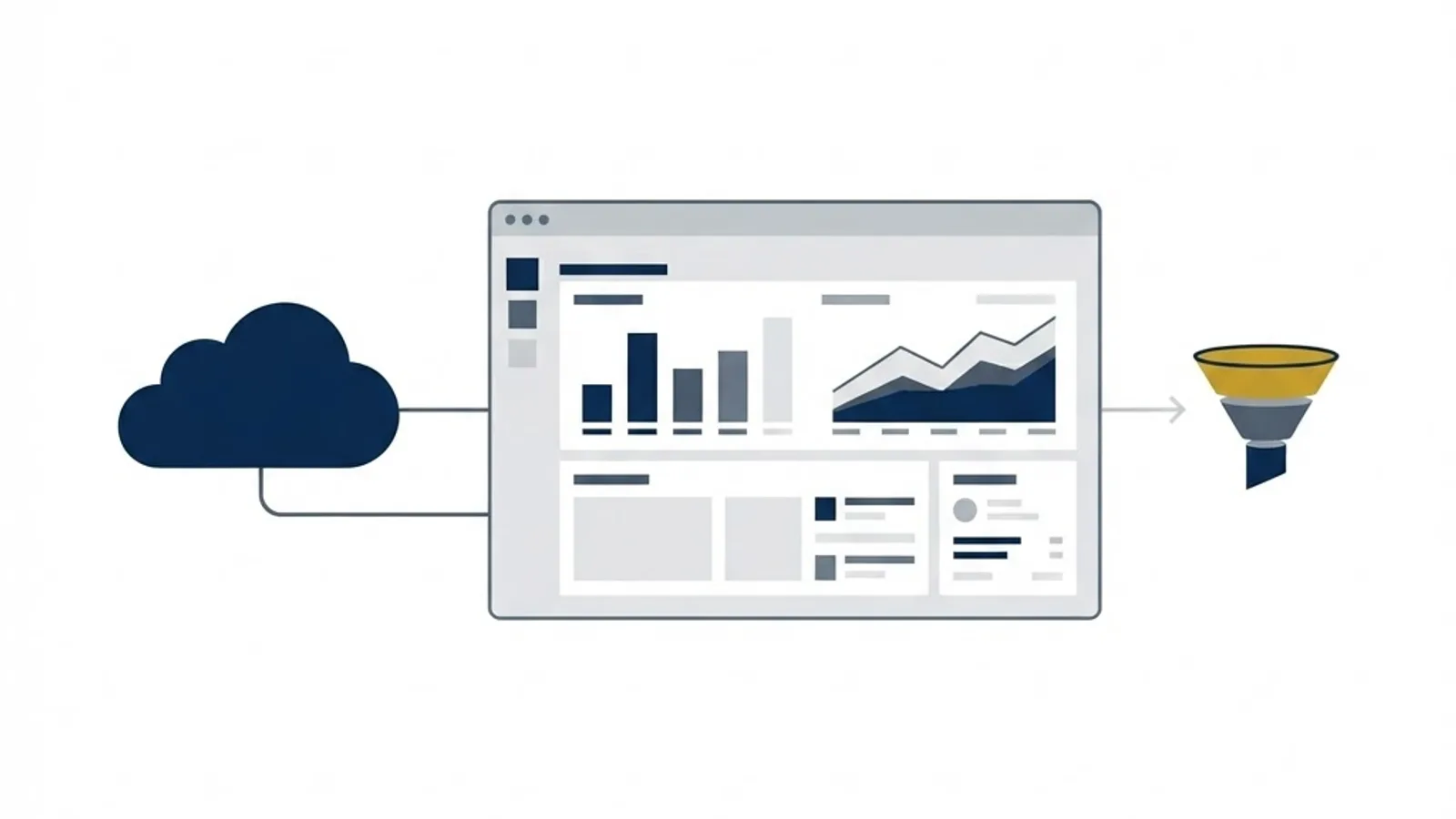
SaaS companies publish more content than almost any other category, and much of it produces nothing. Traffic charts go up while trial signups stay flat, and eventually someone asks whether the blog is worth the budget.
The problem usually isn't effort. Content writing for SaaS fails when articles target broad awareness keywords that have no relationship to the product, or when they explain concepts without ever showing the software solving a real problem.
This guide covers how to build SaaS content that actually converts: funnel mapping, product-led writing, technical credibility, and the metrics that tell you whether it's working.
What Is Content Writing for SaaS?
Content writing for SaaS is the practice of creating written assets that guide software buyers from problem awareness through evaluation to activation and retention. It spans blog articles, comparison pages, documentation, use-case pages, onboarding emails, and integration guides.
What makes it distinct is the buying journey. SaaS purchases involve multiple stakeholders, free trials, technical evaluation, and ongoing renewal decisions — so content has to serve users after signup, not just before.
The core principle is simple: SaaS content should teach the reader to solve a real problem, and show your product as the natural way to do it. Not a pitch, and not a pure tutorial either.
Who Needs SaaS Content Writing?
Nearly every software company benefits, though the emphasis shifts based on go-to-market motion and stage.
- Product-led growth companies that need content to drive self-serve signups without sales involvement.
- Sales-led B2B SaaS using content to educate buying committees and shorten cycles.
- Developer tools where documentation and technical tutorials are the primary acquisition channel.
- Vertical SaaS serving specific industries with regulatory and workflow-specific needs.
- Early-stage startups establishing category credibility before they have brand recognition.
Key Features of Effective SaaS Content
Funnel-Mapped Topic Selection
Every piece should have a defined funnel position. Problem-aware articles capture people who don't know solutions exist. Solution-aware content compares approaches. Product-aware content covers alternatives, pricing, and integrations. Most SaaS blogs are wildly overweighted toward the top.
Product-Led Writing
The strongest SaaS articles demonstrate the workflow inside the product — annotated screenshots, real configurations, actual outputs. This converts far better than abstract advice with a CTA bolted on at the end.
Genuine Technical Credibility
Technical buyers spot hand-waving instantly. Content needs accurate detail, working code where relevant, and honest discussion of limitations. Getting engineering review into the workflow is non-negotiable for developer-facing products.
Content That Supports Retention
SaaS revenue depends on renewal, so help documentation, feature guides, and best-practice content directly affect churn. Teams building this well often invest in the same infrastructure as their app, including React-based front-end development for interactive docs and demos.
How to Get Started: Step by Step
A structured approach prevents the most common SaaS content failure — twelve months of publishing with no attributable pipeline.
- Interview five recent customers about what they searched for before finding you. This beats any keyword tool as a starting point.
- Map your keyword universe to funnel stages and check how badly skewed your existing content is.
- Prioritize bottom and middle funnel first — comparison, alternatives, integration, and use-case content converts fastest.
- Build topic clusters where supporting articles link to a central use-case or feature page.
- Establish an engineering or product review step for anything technical, with a named owner.
- Create product-led templates so writers consistently include screenshots and real workflows.
- Instrument attribution properly: track content-assisted signups and pipeline, not just sessions.
- Review quarterly, refresh decaying posts, and cut topics that generate traffic without conversions.
Benefits of Strong SaaS Content
Content is one of the few SaaS acquisition channels with genuinely improving unit economics over time.
- Declining customer acquisition cost as organic share of signups grows.
- Higher trial-to-paid conversion when onboarding content reduces time to first value.
- Lower churn, because well-documented features get adopted and adopted features get renewed.
- Sales enablement assets reps can send instead of writing custom explanations.
- Category authority that makes every other channel — ads, outbound, partnerships — work better.
Potential Challenges
SaaS content has failure modes specific to the business model. These are the ones worth planning around.
- Top-of-funnel overload. Broad awareness traffic that never converts consumes the entire budget.
- Engineering bottlenecks. Technical review is essential but competes with roadmap work.
- Product drift. UI changes make screenshots and tutorials wrong within months.
- Attribution difficulty in long, multi-touch B2B cycles where content influence is real but hard to isolate.
Best Practices and Tips
These practices separate SaaS content programs that drive revenue from those that merely produce reports.
- Write your comparison and alternatives pages early, and be genuinely fair about competitor strengths. Honesty converts.
- Include at least one product screenshot or real workflow in every commercial-intent article.
- Schedule a screenshot and accuracy audit every two quarters to keep tutorials trustworthy.
- Repurpose long-form content into onboarding emails and in-app guidance rather than writing those separately.
Real-World Example
A project-management SaaS company published 90 articles over 18 months on general productivity and team-management topics. Organic traffic reached about 60,000 monthly sessions, which looked impressive in board decks. Trial signups attributable to content were fewer than 20 a month.
An audit revealed the issue immediately: almost all traffic came from broad informational queries read by students and general readers, and no article showed the product. The team pivoted to 25 new pieces focused on specific workflow problems their actual buyers described in sales calls — resource conflicts across concurrent projects, approval bottlenecks, and integration with existing tools. Each included annotated product screenshots and a template readers could use immediately.
Traffic dropped by roughly a third. Content-attributed trials increased more than six times, and trial-to-paid conversion from that segment ran noticeably above their paid channels. The board deck got less impressive and the revenue got much better.
Why It Matters
AI-generated answers now handle generic software questions directly in search results, which is eliminating clicks to shallow SaaS blog posts. What survives is content with product specificity, original data, and firsthand implementation experience.
That shift actually favors SaaS companies willing to write from real product knowledge. Content writing for SaaS is increasingly about documenting what your team and customers genuinely know — something no summarization engine can replicate.
Frequently Asked Questions
How much should SaaS companies spend on content?
Early-stage teams commonly allocate 10 to 20% of marketing budget, often $3,000 to $15,000 monthly for a serious program. What matters more than the number is the ratio of bottom-funnel to top-funnel investment.
How long until SaaS content drives signups?
Bottom-funnel pages targeting comparison and alternatives keywords can convert within 60 to 90 days. Broader authority-building content typically takes six to twelve months to compound.
Should SaaS content be written by product experts or professional writers?
The best model pairs them: a professional writer structures and clarifies, while a product or engineering expert supplies accuracy and real detail through interviews and review.
Does SaaS content help with retention or only acquisition?
Both, and retention is often underrated. Feature guides and best-practice content increase adoption, which drives renewal. Many teams support this with AI-assisted product and support experiences built on the same content foundation.
Conclusion
Content writing for SaaS works when it's tied to the product and the funnel rather than to traffic targets. Fewer articles, closer to the buying decision, with real screenshots and honest technical detail will outperform a large library of generic advice every time.
Start by interviewing customers, fix your funnel balance, and measure signups instead of sessions. If you want a partner who understands product-led writing, explore SaaS content writing services and build a program aimed at revenue.